
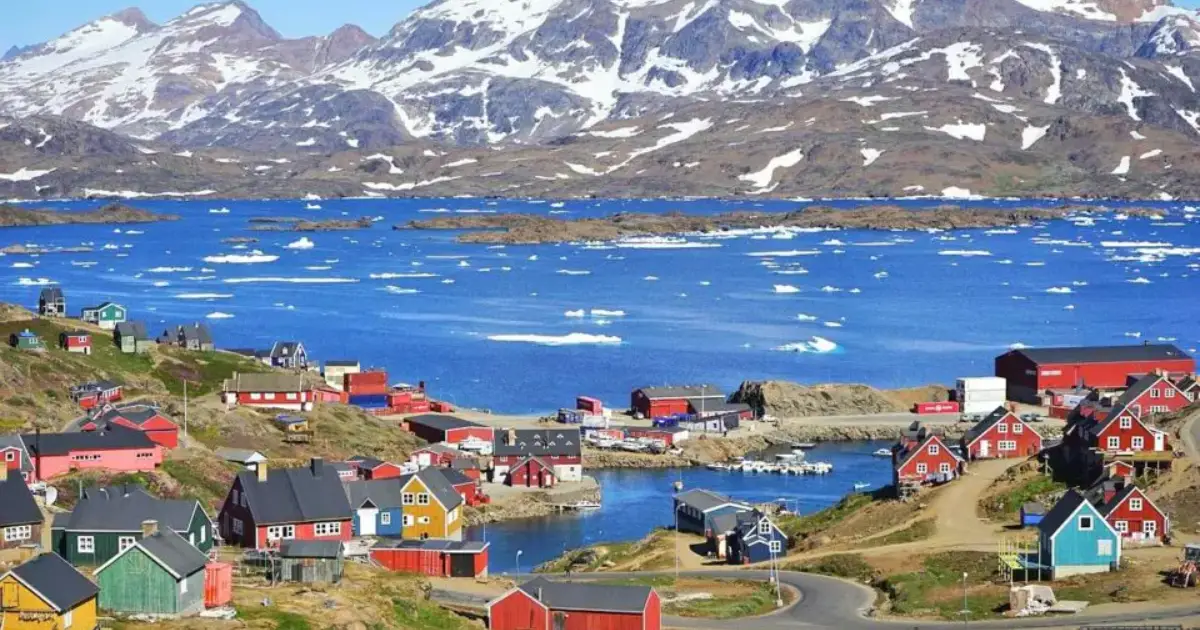
President Donald Trump has recently revived his controversial plan to acquire Greenland, the autonomous Danish territory. Beyond the geopolitical shockwaves this could create, the situation raises a fascinating question for anyone interested in global economics and international finance: Can countries actually buy and sell territories in today’s world?
Let’s dive into the financial and legal framework behind such an extraordinary transaction.
The Legal Framework: Is Territory Purchase Even Possible?
Surprisingly, yes. International law does permit territorial purchases, but with significant conditions that make such deals extremely rare in the modern era.
Here’s what would need to happen:
- Autonomy Requirements: The territory must have sufficient independence to negotiate its own sale. Greenland, despite having its own government, remains subordinate to Denmark in matters of foreign policy and defense, creating a major legal hurdle.
- Popular Consent Through Referendum: Any territorial transfer would require a public vote, not just from Greenland’s 57,000 residents, but also from Denmark’s entire population. This democratic safeguard ensures the people’s will is respected.
- Congressional Approval and Funding: The U.S. Congress would need to approve the transaction with a two-thirds majority and allocate funds for the purchase. This adds another layer of complexity to an already difficult process.
- European Union Authorization: Since Denmark is an EU member, the bloc would need to approve the sale. European leaders have already stated they would never greenlight such a deal.
The Historical Context: When Countries Were Commodities
Before World War II, nations could trade territories like simple real estate transactions, with zero input from local populations.
The United States has a rich history of territorial purchases:
- Louisiana Purchase (1803): Bought from France for $15 million, roughly $342 million in today’s dollars
- Alaska Purchase (1867): Acquired from Russia for $7.2 million, about $140 million today
- U.S. Virgin Islands (1917): Purchased from Denmark for $25 million, approximately $542 million in current value
These deals happened without consulting the people living in those territories. Today’s international standards, established by the United Nations after 1945, require territorial transfers to prioritize the will of the affected populations.
Want to learn more about how historical economic decisions shape today’s markets? Check out our other articles on Finanovice exploring the intersection of politics and personal finance.
Why Greenland Matters: The Strategic Resource Angle
This isn’t just about land. Greenland sits on vast reserves of critical minerals including rare earth elements, lithium, and hydrocarbons locked beneath Arctic ice.
The Numbers Tell the Story
These resources are becoming increasingly valuable as the world transitions to green energy. Rare earth elements are essential for:
- Electric vehicle batteries
- Wind turbines
- Solar panels
- Advanced electronics
The market for rare earth elements alone is projected to reach $9.6 billion by 2026, making Greenland’s untapped reserves incredibly attractive from an investment perspective.
Additionally, melting Arctic ice is opening new shipping routes that could revolutionize global trade, potentially reducing shipping times between Asia and Europe by 40%.
The Financial Proposal: Buying Individual Support
In an unprecedented move, Trump administration officials have floated the idea of offering direct payments to Greenland’s residents.
- The Proposed Deal: According to Reuters sources, Washington is considering offering between $10,000 and $100,000 to each of Greenland’s approximately 57,000 inhabitants in exchange for political support and votes in a potential referendum.
- The Math: At the lower end ($10,000 per person), this would cost $570 million. At the higher end ($100,000 per person), the price tag jumps to $5.7 billion.
For context, that’s still less than what the U.S. paid for Alaska when adjusted for inflation, and significantly cheaper than many modern infrastructure projects.
However, polls show most Greenlanders want independence from Denmark but oppose becoming part of the United States, making even financial incentives a tough sell.
Market Implications: What This Means for Investors
The Greenland situation offers several lessons for personal finance enthusiasts and investors:
Geopolitical Risk Assessment: Understanding how international tensions affect markets is crucial. The Trump-Greenland saga has already impacted:
- Defense contractor stocks
- Rare earth mining companies
- Arctic shipping investments
- Danish-American trade relations
Resource Scarcity and Value: Greenland’s mineral wealth demonstrates why resource-rich regions command premium valuations. For individual investors, this highlights the importance of diversifying into commodities and natural resource funds.
Currency Fluctuations: International disputes often trigger currency movements. The Danish krone has experienced volatility amid these tensions, offering both risks and opportunities for forex traders.
Curious about how geopolitical events impact your investment portfolio? Explore our comprehensive guides on Finanovice about protecting your assets during international uncertainty.
The NATO Factor: Alliance Economics Under Strain
Both the U.S. and Denmark are NATO members, making this territorial dispute particularly delicate.
The Cost of Tension: NATO allies contribute billions annually to collective defense. Any fracture in the alliance could have significant economic ramifications:
- Reduced military cooperation efficiency
- Potential shifts in defense spending
- Trade relationship complications
- Investment uncertainty in transatlantic markets
The situation demonstrates how political decisions at the highest levels can ripple through financial markets and affect everyday investors.
Alternative Strategies: Military Presence Without Purchase
The U.S. already maintains military installations in Greenland due to its strategic position between North America and Russia.
Expanding Existing Agreements: Rather than purchasing territory, Washington could negotiate expanded military and economic cooperation. This approach would be:
- Less legally complex
- More politically palatable
- Financially more efficient
- Easier to implement quickly
Such agreements often involve infrastructure investments, technology transfers, and economic development packages that benefit local populations while achieving strategic objectives.
What History Teaches Us About Modern Territorial Deals
The last successful territorial purchase between nations occurred in the late 19th century when the U.S. acquired the Philippines from Spain.
Why Such Deals Are Now Extinct
Modern international law prioritizes:
- Self-determination
- Popular sovereignty
- Human rights
- Democratic processes
These principles make traditional territorial purchases virtually impossible. Any contemporary transfer would require reframing as a “consensual territorial cession” with robust democratic participation.
The Bottom Line: Economics Meets Geopolitics
Trump’s Greenland ambitions, while legally possible under narrow circumstances, face overwhelming practical obstacles. The intersection of international law, democratic processes, European Union politics, and local resistance creates a near-impossible scenario for purchase.
Key Takeaways for Finance Enthusiasts:
- Sovereignty Has Economic Value: Territories aren’t just land; they represent resources, strategic position, and economic potential
- Democratic Processes Matter: Modern markets favor stability and predictability that democratic consent provides
- Geopolitical Tensions Create Opportunities: Understanding these dynamics helps investors anticipate market movements
- Resource Scarcity Drives Value: Greenland’s appeal demonstrates how critical materials command premium prices
For investors and economics watchers, the Greenland situation serves as a masterclass in how international relations, resource economics, and political strategy intersect in the modern world.
Understanding these complex dynamics is essential for anyone serious about building wealth and making informed financial decisions in an increasingly interconnected global economy.
Want to stay ahead of major economic shifts driven by geopolitical events? Subscribe to Finanovice for regular insights on how world affairs impact your personal finances and investment strategies.
What do you think about territorial purchases in the modern era? How do you factor geopolitical risks into your investment decisions? Share your thoughts in the comments below, and don’t forget to check out our other articles exploring the fascinating world where politics, economics, and personal finance collide.





Leave a Reply