Foreclosure auctions can offer remarkable opportunities — properties below market value, motivated sellers, and deals that simply don’t exist on the traditional real estate market. But they also come with risks that can turn a dream investment into a financial nightmare.
The good news is that most of these risks are manageable. The buyers who get burned at auctions are almost always the ones who skipped their homework. The buyers who succeed are the ones who walked in prepared.
In this guide, we’ll cover the biggest risks of buying a house at auction — and exactly what you can do to protect yourself.
Risk #1: You Can’t Inspect the Property Before You Buy
This is the single most important risk to understand about foreclosure auctions, and it catches more beginners off guard than anything else.
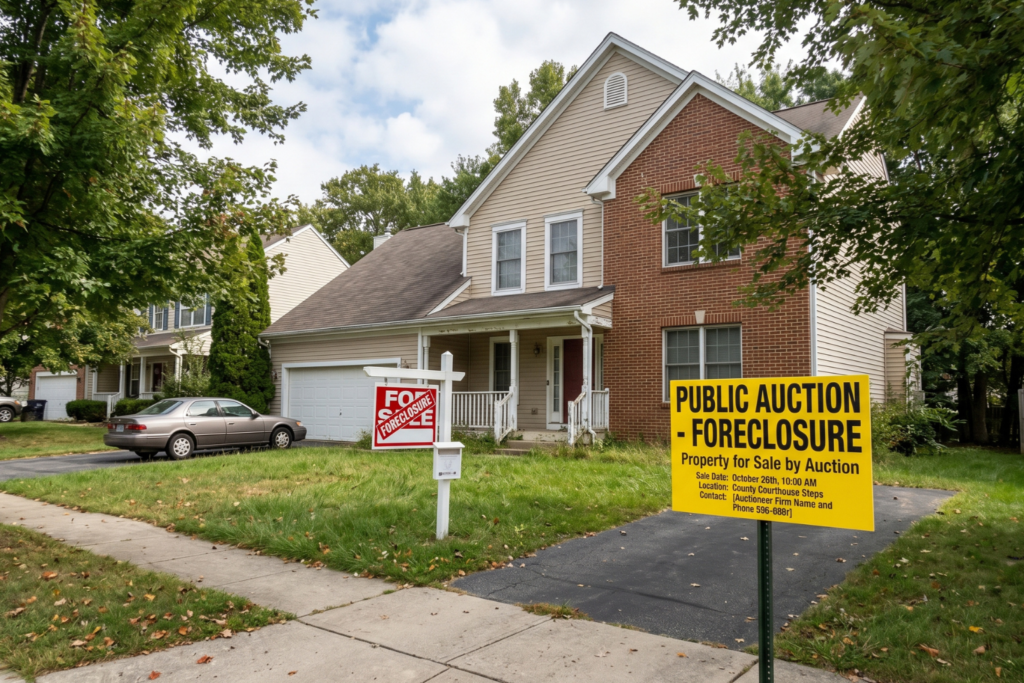
Unlike a traditional home purchase — where you hire an inspector, walk through every room, and check every system before signing — at a foreclosure auction, the property is sold as-is. In most cases, you cannot enter the property before bidding. You are buying whatever is behind that door, sight unseen.
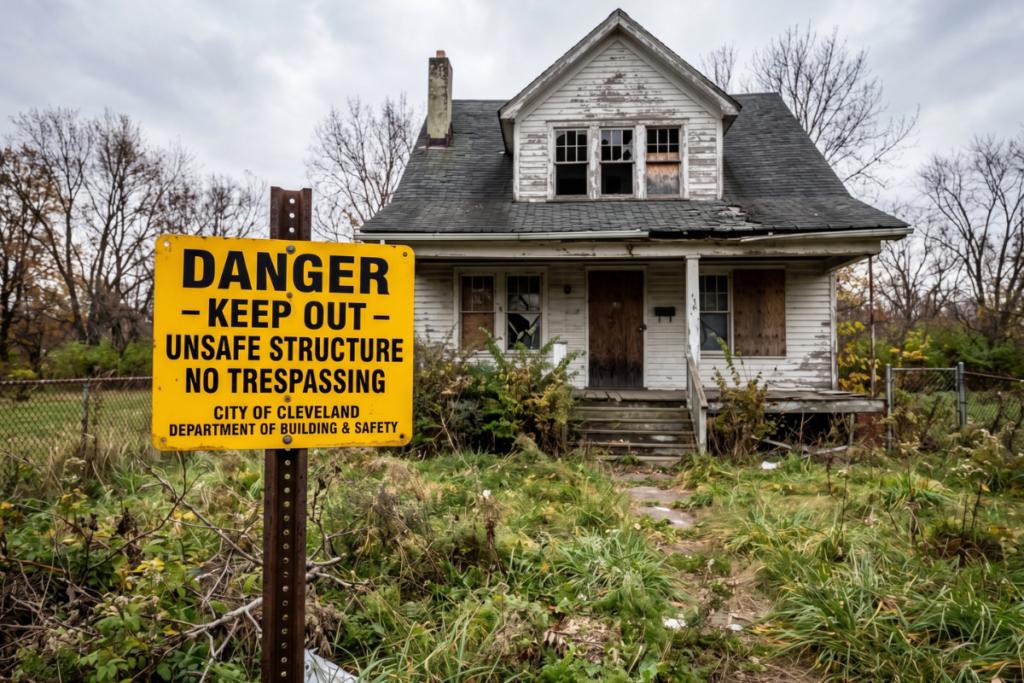
What could be behind that door? Structural damage from years of neglect. A roof that needs complete replacement. Mold hidden inside the walls. Plumbing that was stripped out by the previous owner or vandals. Electrical systems that are decades out of code.
Any one of these issues could cost tens of thousands of dollars to fix — easily erasing the discount you got at auction.
How to reduce this risk
- Drive by the property and observe the exterior carefully. Look for visible damage, boarded windows, or signs of neglect.
- Research the property’s history through county records. How long has it been vacant? Were there any code violations or permit issues?
- Use Google Street View to check the neighborhood and the property’s condition over time.
- If any access is legally permitted before the auction, take it — and bring a contractor who can give you a rough estimate of repair costs.
- Always factor a significant repair budget into your maximum bid. If the numbers don’t work with a conservative repair estimate, don’t bid.
Risk #2: Hidden Liens and Unpaid Debts
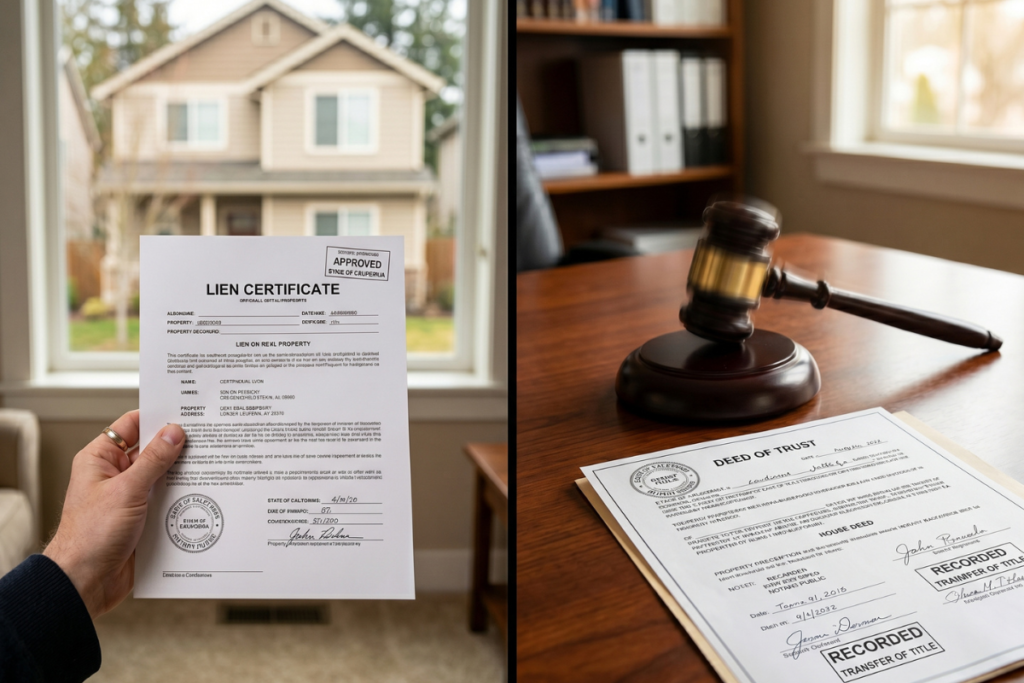
When you buy a property at a foreclosure auction, you are not buying a clean slate. The property may have liens attached to it — legal claims from creditors who are owed money.
These can include unpaid property taxes, HOA (homeowners association) fees, contractor liens from unpaid work, municipal fines for code violations, and in some cases, second or third mortgages.
Here’s the part that surprises most beginners: in some cases, those debts become your responsibility when you take ownership. Not always — it depends on the type of auction and the type of lien — but the risk is real and can be financially devastating.
One investor purchased a property at a tax deed auction for $45,000, thinking it was a great deal. After the sale, she discovered $38,000 in unpaid HOA fees and municipal fines that had accumulated over years of vacancy. Her bargain suddenly looked very different.
How to reduce this risk
- Always run a title search before bidding on any property. A title search examines the public record and identifies all liens, encumbrances, and claims attached to the property.
- Consult a real estate attorney who can help you understand which liens survive the foreclosure and which are extinguished.
- Consider purchasing title insurance after the auction if it’s available for the property type.
Risk #3: The Property Is Occupied
Winning an auction doesn’t mean you can move in — or start renovations — the next day. In many foreclosure cases, the previous owner or a tenant is still living in the property.
Removing an occupant is a legal process called eviction, and it takes time. Depending on your state’s laws, an eviction can take anywhere from a few weeks to several months. During that time, you cannot access the property, and you are still responsible for property taxes and insurance.
In some cases, occupants resist eviction and the process ends up in court — adding legal fees on top of the delay.
How to reduce this risk
- Research the property’s occupancy status before bidding. County records, utility records, and a simple drive-by can often tell you whether the property appears occupied.
- Budget for potential eviction costs — both legal fees and the time cost of delayed access.
- In some states, buyers can offer cash for keys — a negotiated payment to the occupant in exchange for a faster, voluntary departure. This is often cheaper and faster than a formal eviction.
Risk #4: Title Issues
Related to but distinct from liens, title issues are problems with the legal ownership history of a property that can cloud your right to own it — or resell it — in the future.
Foreclosure properties sometimes have complicated title histories. There may be disputes about whether the foreclosure process was conducted correctly. There may be heirs who claim a right to the property. There may be errors in public records that create legal uncertainty.
If you buy a property with a clouded title and later try to sell it, you may find that buyers’ lenders won’t approve a mortgage on it — severely limiting your exit options.
How to reduce this risk
- Always conduct a thorough title search before bidding.
- Work with a real estate attorney experienced in distressed properties.
- Understand that tax deed properties in particular can carry title risks that standard foreclosures do not.
Risk #5: Auction Fever — Overbidding Under Pressure
The auction environment is psychologically charged. The adrenaline of competition, the fear of losing a property you’ve researched and become attached to, and the social pressure of a room full of bidders can all push you to bid more than you should.
This phenomenon — known as auction fever — is one of the most common and preventable causes of bad auction outcomes. Buyers who had a clear budget in mind find themselves raising their paddle one more time, then one more time again, until they’ve paid more than the property is worth.
The math is unforgiving: if you overpay at auction, you’ve eliminated the very advantage that made the auction attractive in the first place.
How to reduce this risk
- Set your maximum bid before the auction — not during it. Write it down.
- Base your maximum on hard numbers: comparable sales in the area, a realistic repair estimate, and your target return.
- Treat your maximum bid as absolute. When you reach it, stop. There will always be another property.
- If you’re attending your first few auctions, consider going as an observer without bidding at all. Get comfortable with the environment before money is on the line.
Risk #6: Financing Challenges
Most foreclosure auctions require payment in full — in cash — on the day of the auction or within 24 to 48 hours. Traditional mortgage financing is rarely an option.
This means you need to have your funds ready before you bid. If you win and can’t pay, you typically forfeit your deposit and may be barred from future auctions.
For buyers who don’t have large cash reserves, this is a significant barrier. Some investors use hard money loans — short-term, asset-based loans from private lenders — to finance auction purchases. But these loans come with high interest rates and short repayment terms that need to be factored into your overall return calculation.
How to reduce this risk
- Know exactly what funds you have available before you register to bid.
- If using a hard money loan, secure pre-approval before the auction and understand all the terms clearly.
- Never bid more than you can actually pay within the required timeframe.
The Bottom Line
Every one of these risks is real — but none of them is insurmountable. The buyers who succeed at foreclosure auctions are not reckless risk-takers. They are disciplined, informed, and patient.
They do their research. They know their numbers. They set their limits and stick to them. And they understand that the best deal is sometimes the one you walk away from.
At Finanovice, we believe that preparation is the best protection. The more you know before you bid, the better your chances of turning a foreclosure auction into a genuine opportunity.
Quick Recap
- You cannot inspect most foreclosure properties before buying — always account for repair costs
- Hidden liens and unpaid debts can transfer to you as the new owner — always run a title search
- Occupied properties require a legal eviction process that takes time and money
- Title issues can complicate future resale — work with a real estate attorney
- Auction fever is real — set your maximum bid before the auction and never exceed it
- Most auctions require full cash payment — have your funds ready before you bid
Ready to take the next step? Learn how to research a property before you bid: [How Foreclosure Auctions Work →]
Stay curious. Stay smart. That’s the Finanovice way.
Disclaimer: This article is for educational purposes only and does not constitute financial or legal advice. Always consult a qualified professional before making any real estate investment decisions.