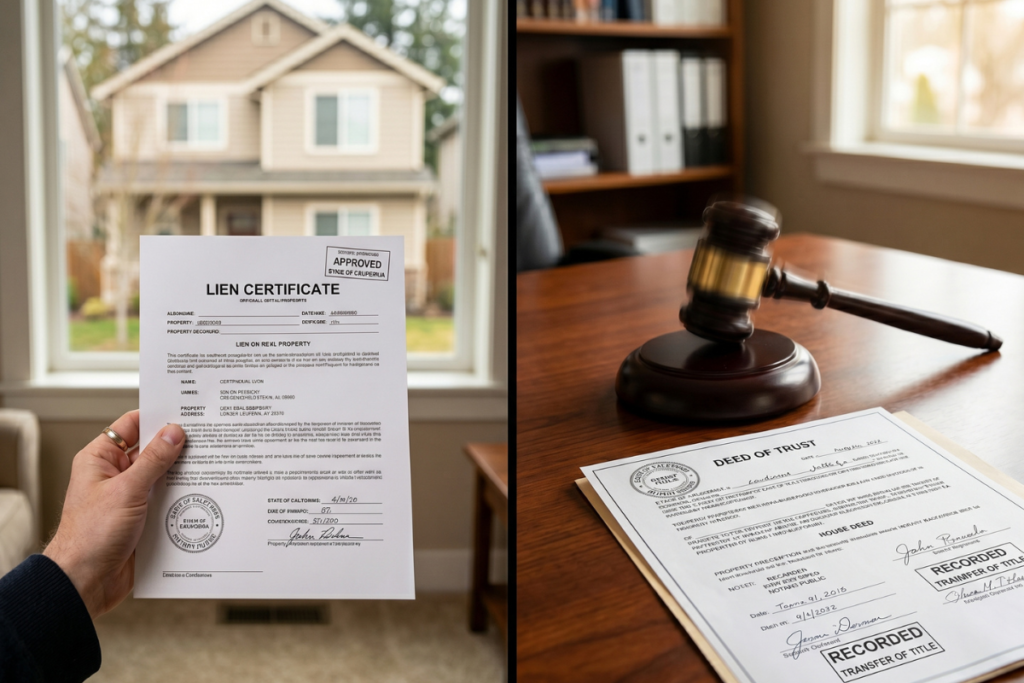
Have you ever heard of someone buying a house for a fraction of its market value? It sounds too good to be true — but it happens every day at foreclosure auctions across the United States. The catch? If you don’t know the rules of the game, you can lose money fast.
In this guide, we’ll walk you through exactly how foreclosure auctions work, step by step, in plain English. No jargon, no confusion — just what you actually need to know before you even think about raising your hand at one of these sales.
What Is a Foreclosure Auction?
When a homeowner stops paying their mortgage, the lender (usually a bank) has the legal right to take back the property. This process is called foreclosure. Once the bank takes ownership, it needs to recover the money it’s owed — and it does that by selling the property at a public auction.
These auctions are open to the public. That means regular people — not just big investors — can show up and bid on a home.
Think of it like an eBay auction, but for real estate, and with much higher stakes.
Why Do Properties Sell Below Market Value?
This is the question everyone asks first — and it’s a fair one.
Properties at foreclosure auctions often sell below market value for a few reasons:
- Speed matters more than price. The bank wants its money back quickly, not necessarily at the best possible price.
- The property may have issues. Buyers usually cannot inspect the home before bidding. There could be damage, unpaid taxes, or even tenants inside.
- Competition is lower. Many buyers are scared off by the complexity and risks involved. Less competition = lower prices.
That discount is real — but so are the risks. We’ll get to those in a moment.
The Two Main Types of Foreclosure Auctions
Not all foreclosure auctions are the same. In the U.S., there are two main types you’ll encounter:
1. Courthouse Steps Auction (In-Person)
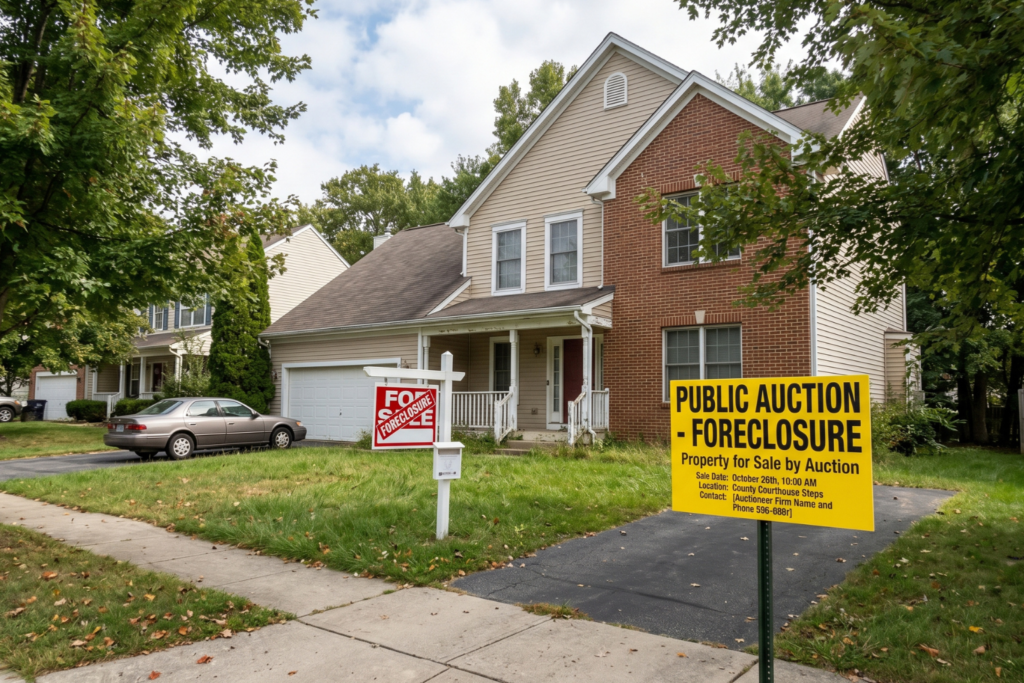
This is the classic foreclosure auction. It’s held at the county courthouse, often right outside on the steps — hence the name. A trustee or sheriff reads out the property details, and registered bidders compete in real time.
These auctions move fast. A property can be sold in under five minutes.
2. Online Foreclosure Auction
Platforms like Auction.com, Hubzu, and RealtyBid now host foreclosure auctions online. You can browse listings, register, and bid from your computer. This format is growing quickly and tends to give buyers a bit more time to research properties.
Step-by-Step: How a Foreclosure Auction Works
Here’s what the process looks like from start to finish:
Step 1 — The homeowner defaults on the mortgage. After several missed payments (usually 3–6 months), the lender begins the legal foreclosure process.
Step 2 — A Notice of Sale is published. By law, the lender must publicly announce the auction. Notices are posted at the courthouse and published in local newspapers or online. This is how you find out about upcoming auctions.
Step 3 — You research the property. This is the most important step. Before bidding, you want to look up the property’s estimated value, check for any liens (debts attached to the property), and understand the neighborhood.
Step 4 — You register to bid. Most auctions require you to register in advance and show proof that you have the money ready — usually in the form of a cashier’s check or certified funds. Some online platforms require a deposit just to participate.
Step 5 — Bidding begins. The auction starts at a minimum bid, which is typically the amount the lender is owed. Bidders compete until only one remains. The highest bidder wins.
Step 6 — You pay and receive the deed. If you win, you usually have to pay the full amount the same day or within 24 hours. Shortly after, the deed to the property is transferred to your name.
The Risks Every Beginner Must Know
Foreclosure auctions can be a great opportunity — but they’re not for the unprepared. Here are the biggest risks:
You can’t inspect the property beforehand. The home is sold “as is.” You might win the auction only to discover a damaged roof, a flooded basement, or mold problems that cost thousands to fix.
There may be other liens on the property. Even after you buy the house, there could be unpaid tax debts or other legal claims attached to it. In some cases, those debts become your responsibility.
You need cash — and fast. Most foreclosure auctions don’t accept financing. You need to show up with the funds ready. This makes it harder for first-time buyers without significant savings.
Previous owners may still be inside. Evicting a former homeowner or tenant after an auction can be a stressful, time-consuming legal process.
Is a Foreclosure Auction Right for You?
Foreclosure auctions are best suited for buyers who:
- Have cash available (or access to hard money loans)
- Are comfortable with some level of risk
- Have done thorough research on the property
- Understand the local real estate market
If you’re just starting out, it’s a great idea to attend a few auctions as an observer before you ever bid. Watch how it works. Talk to other bidders. Get comfortable with the process before any money is on the line.
Quick Recap
Let’s summarize what we covered:
- A foreclosure auction happens when a bank sells a property after the owner stops paying the mortgage
- Properties can sell below market value, but there are real risks involved
- There are two main formats: courthouse auctions (in person) and online auctions
- The process moves fast — research and preparation are everything
- Beginners should observe first, bid later
What’s Next?
Now that you know how foreclosure auctions work, you’re ready to go deeper. In our next post, we’ll cover the difference between tax lien and tax deed auctions — another way investors find undervalued properties, and one that many beginners overlook.
Stay curious. Stay smart. That’s the Finanovice way.
Disclaimer: This article is for educational purposes only and does not constitute financial or legal advice. Always consult a qualified professional before making any real estate investment decisions.