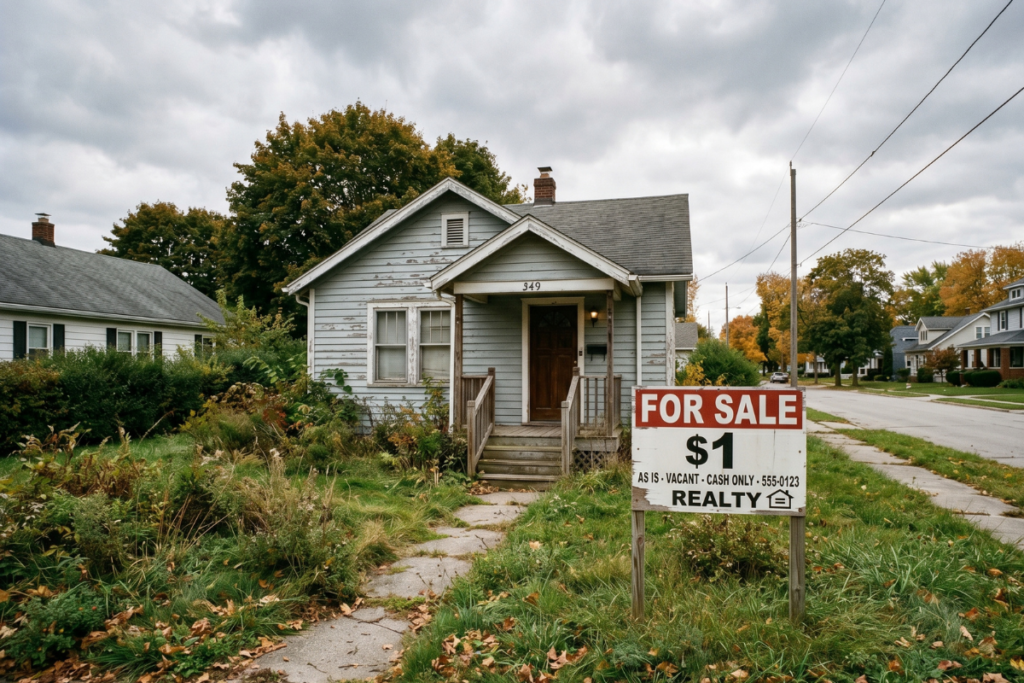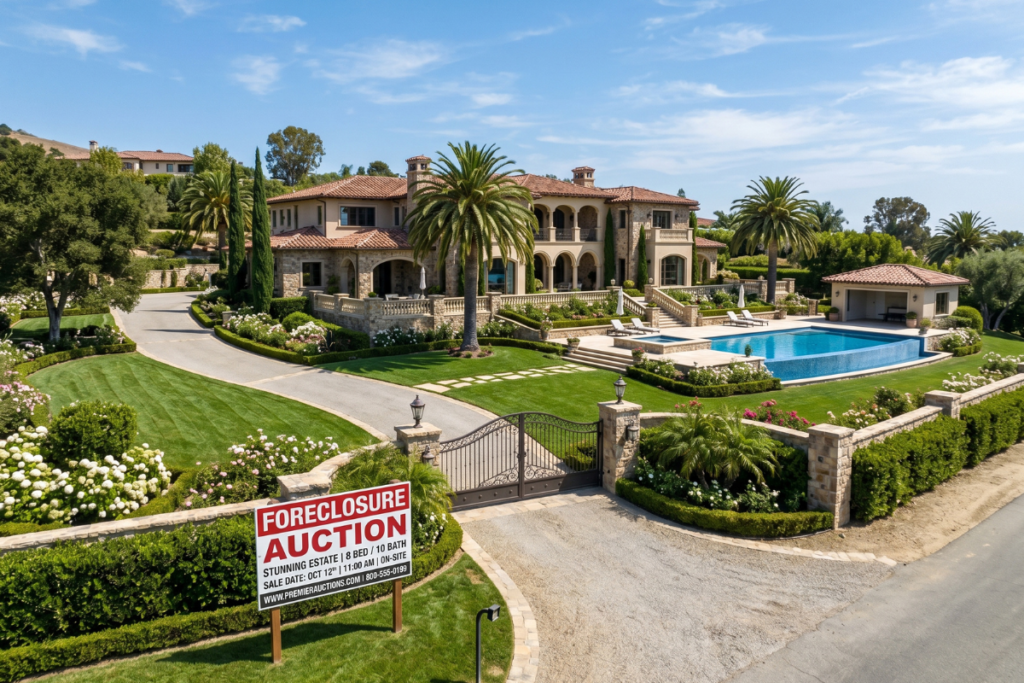
When most people think of foreclosure auctions, they picture modest suburban homes or rundown properties in struggling neighborhoods. But the truth is far more interesting: some of the most spectacular real estate deals in American history have involved mansions, penthouses, and luxury estates — sold at auction for prices that made headlines across the country.
These are not fairy tales. They are real transactions that happened at real auctions, with real buyers who walked away with extraordinary properties at extraordinary discounts.
Here are some of the most jaw-dropping stories.
The Palm Beach Mansion That Sold for a Third of Its Value
In the years following the 2008 financial crisis, the luxury foreclosure market exploded. Developers, investors, and even celebrities who had borrowed heavily during the boom years suddenly found themselves unable to service their debts. Banks moved in. Auctions followed.
One of the most talked-about cases involved a waterfront mansion in Palm Beach, Florida — a property with seven bedrooms, a private dock, and sweeping ocean views. At the peak of the market, the estate had been valued at over $12 million.
At foreclosure auction, it sold for $4.1 million.
The buyer — an investor who had been monitoring distressed luxury properties for months — paid less than 35 cents on the dollar for a property that, once the market recovered, was worth multiples of what he paid.
The lesson most observers took away: the luxury market is not immune to foreclosure, and prepared buyers can find opportunities that most people never even know exist.
The Connecticut Estate: 14 Rooms, Going Once, Going Twice…
In Fairfield County, Connecticut — one of the wealthiest counties in the United States — a 14-room estate with a pool, a tennis court, and over four acres of landscaped grounds went to foreclosure auction after its owner, a hedge fund executive, defaulted on a $6.8 million mortgage.
The property had been listed on the traditional market for two years with no takers. Buyers were scared off by the price, the carrying costs, and the condition of the property, which had been vacant for years.
At auction, the estate sold for $2.3 million — a fraction of the outstanding mortgage, and an even smaller fraction of what comparable properties in the area were selling for.
The new owner spent an additional $800,000 on renovations and later sold the estate for $5.9 million — a profit of nearly $3 million on a foreclosure auction purchase.
The Las Vegas High-Rise Penthouse
Las Vegas was ground zero for some of the most dramatic real estate collapses of the 2008 crisis. New luxury high-rises that had been sold off-plan at the height of the boom sat half-empty as developers ran out of money and buyers walked away from their deposits.
Several penthouse units in one of the city’s most prominent new towers went to auction when the developer defaulted on construction loans. These units had been marketed at prices ranging from $2 million to $4.5 million during the presale period.
At foreclosure auction, some of them sold for under $500,000.
Buyers who purchased those penthouses and held them through the recovery saw their properties appreciate dramatically over the following decade.
Why Do Luxury Properties End Up at Auction?
The reasons are often similar to those behind standard foreclosures, just at a larger scale:
Over-leveraged developers borrow heavily to build luxury projects, then run out of cash when the market turns or construction costs overrun.
High-net-worth individuals are not immune to financial crisis. Business failures, divorces, investment losses, and market downturns can affect anyone — regardless of the value of their home.
Carrying costs on luxury properties are enormous. Property taxes, insurance, maintenance, and HOA fees on a multi-million dollar estate can run tens of thousands of dollars per month. When cash flow dries up, even wealthy owners can find themselves unable to keep up.
Luxury properties take longer to sell on the traditional market, which means lenders sometimes push faster to recover their money through auction rather than waiting for a private sale.
What Makes Luxury Foreclosures Different
Buying a distressed luxury property comes with unique challenges that go beyond the standard foreclosure risks:
Maintenance costs are higher. A neglected mansion deteriorates fast. Pools, HVAC systems, elevators, and custom finishes all require specialized — and expensive — maintenance.
The buyer pool is smaller. When it comes time to sell, you’re competing for a limited number of buyers who can afford luxury real estate.
Due diligence is more complex. Larger properties often come with more complicated title histories, more potential liens, and more regulatory considerations.
But for buyers with the capital, the knowledge, and the patience to navigate these challenges, distressed luxury properties have historically offered some of the most asymmetric opportunities in real estate.
The Bigger Picture
These stories share a common thread: the foreclosure auction market does not discriminate by price range. From a $1 lot in Detroit to a $4 million Palm Beach mansion, the same fundamental dynamics apply — a motivated seller, a public auction, and a buyer who showed up prepared.
The buyers who walked away with these extraordinary deals were not lucky. They were informed, patient, and disciplined. They knew what they were buying, what it was worth, and exactly how much they were willing to pay.
That’s the Finanovice approach to every auction — regardless of the price tag.
Quick Recap
- The 2008 financial crisis sent thousands of luxury properties to foreclosure auction
- Mansions, penthouses, and estates have sold for as little as 20–35% of their market value
- Luxury foreclosures happen due to over-leveraged developers, personal financial crises, and high carrying costs
- Distressed luxury properties come with unique risks — higher maintenance, smaller buyer pool, complex due diligence
- Prepared, disciplined buyers have turned these auctions into some of the most profitable real estate deals in history
Curious about how the foreclosure auction process works from start to finish? Read our beginner’s guide: [How Foreclosure Auctions Work →]
Stay curious. Stay smart. That’s the Finanovice way.
Disclaimer: This article is for educational purposes only and does not constitute financial or legal advice. Always consult a qualified professional before making any real estate investment decisions.